Get rooted, grow native species of plants!
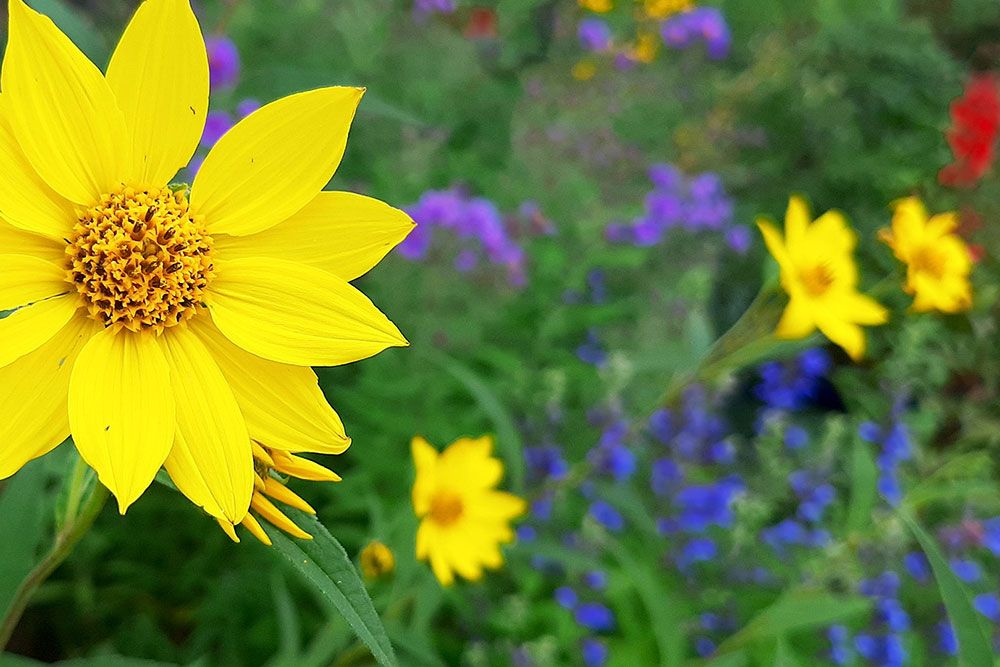
Ausable Bayfield Conservation Authority (ABCA) encourages you to ‘Get Rooted, Grow Native Plants!’
World Wetlands Day is Monday, February 2, 2026. Ausable Bayfield Conservation Authority (ABCA) is encouraging people to ‘Get Rooted, Grow Native Plants.’
Angela Van Niekerk is ABCA Wetlands Specialist. She said wetlands are extremely important and provide many benefits to people and to water quality and quantity.
“Together, we can create healthier, more diverse wetlands and natural spaces,” she said. Since 2008, Ausable Bayfield Conservation has helped more than 130 local landowners create 174 wetlands.
The wetland projects have been possible with low or no costs to the participating landowners. This is thanks to the support of funding partners such as: Fisheries and Oceans Canada; Environment and Climate Change Canada; the Ontario Ministry of the Environment, Conservation and Parks; and Huron County Clean Water Project. Other funding partners have included Ducks Unlimited Canada and ALUS Middlesex among others.
Do you think a wetland may enhance your property? “Give us a call at Ausable Bayfield Conservation for a site visit and to find out about financial incentives to make your project possible,” said Van Niekerk. Staff make it easy for landowners to do these projects with little or no paperwork, she said.
If you want to contribute to more native plants being planted in the community, you may donate on the ABCA website. As well, you can contact ABCA for volunteer opportunities.
The theme for World Wetlands Day (WWD) 2026 is ‘Wetlands and traditional knowledge: Celebrating cultural heritage.’ This year’s celebration “ ... highlights the deep-rooted connections between wetlands and cultural practices, traditions and knowledge systems of communities across the globe.”
To learn more visit WorldWetlandsDay.org
SEED SOWING WORKSHOP IS NOW FULL
ABCA has partnered with Baker’s Nursery Ltd., in the Bayfield area, to host a workshop, on seeds from native plant species. The workshop is Thursday, February 5, 2026. The public interest in the workshop was so great it became fully registered within a couple of days.
Todd Baker, of Baker’s Nursery, will give insight, at the workshop, on the whole process of growing native species of seeds. He will share about seed cleaning to stratification. Workshop registrants can participate in some hands-on sowing of seeds. Angela Van Niekerk will discuss, at the workshop, where they plant native species of plants at local wetland restorations.
Anyone interested in being placed on a waiting list for future native plant species workshops, can provide their contact information (name and email address) to Angela Van Niekerk at avanniekerk@abca.ca
#WorldWetlandsDay
Dreaming About Spring
While your garden sleeps, check out native species of plants ...
Bloodroot
Bloodroot (Sanguinaria canadensis) is one of the first native species of flowers to bloom in early spring.
Bloodroot provides bees and insects with early pollen.
Ants are attracted to the seeds and carry them to their nests to eat the elaisomes (protective flesh around the seed). The ants then carry the seed to their dump area where the seeds germinate while being protected.
This plant prefers partly shaded to shaded rich woods or gardens and pairs well with Virginia Bluebells or other spring ephemerals.
Plant ferns, Wild Columbine or Coral Bells around for when the Bloodroot goes dormant.
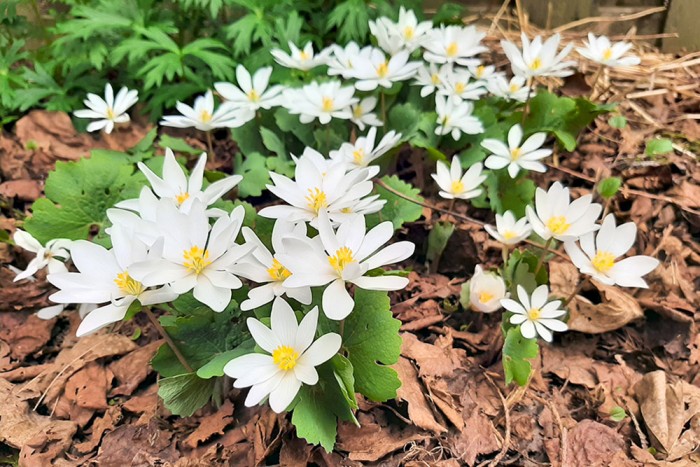
Photo above: Bloodroot (an upland woodland plant)
Marsh marigold
Marsh marigold (Caltha palustris)
This beauty attracts pollinators (sweat bees, hoverflies, and more).
Later in the season wood ducks and sora rail, finches and juncos eat the seeds.
This wetland plant blooms April to May, loves wet areas along creek banks, swamps, and edges of ponds where the soil doesn’t dry out.
The Marsh marigold prefers part shade to full sun, and medium to wet soils.
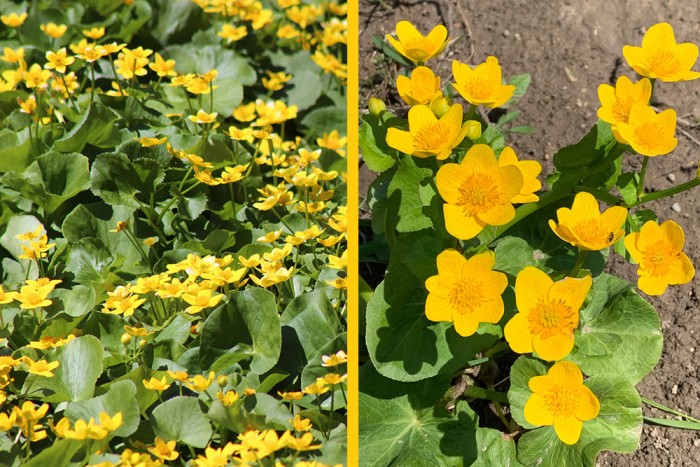
Photo above: Marsh marigold.
How to make your garden an oasis for birds and other wildlife
Dreaming about spring?
Looking to find out how your garden can be an oasis for birds and other wildlife?
This presentation by Doug Tallamy helps you to see your property from a nature perspective.
The University of Guelph Arboretum also provides winter workshops to help you naturalize your property.
Or, contact us to learn more about trees or wetlands. Thanks for doing your part!
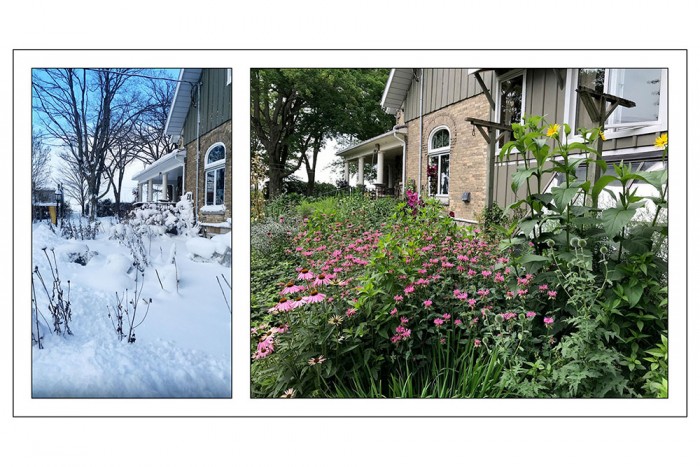
#DreamingAboutSpring