From Soil to Songbirds: Why Native Plants Matter
By Renee Sandelowsky and Helen Varekamp
Renee Sandelowsky and Helen Varekamp are Bayfield residents and local volunteers. They are writing a monthly series of articles about the benefits of planting native species of plants and the need to remove invasive species. This month (April 2026) they are writing about why native species of plants matter.
If you have been reading our articles, you already understand the devastating and costly problems invasive species can create. Maybe you have already pulled your Burning Bush and you are working on eradicating a large patch of Periwinkle. If so, congratulations and thank you! For those of you who are new to our articles, here’s a reminder – invasive species of plants are non-native plants that cause harm to our economy, human health, and/or the environment.
Invasive species of plants spread aggressively and displace native species while disrupting the ecological relationships on which people and wildlife depend. They often naturalize in areas other than our gardens, such as forests and roadsides. It may take millions of dollars to eradicate these villains.
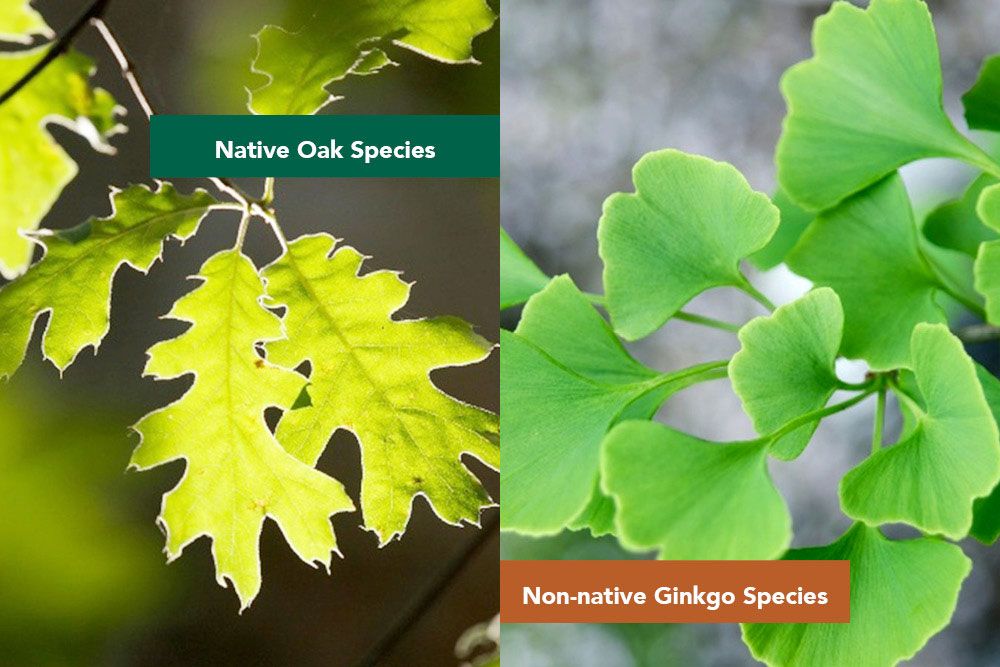
So, why is it important to replace invasive species with native plants? Why not plant non-native plants which are not on the invasive list? Let’s look at one example: a native Oak tree versus a Ginkgo tree which originates from China.
Native Oak trees support more than 500 species of butterflies and moths alone. Compare this to Ginkgo trees which support, at most, five species. Over thousands of years, native Oak trees have evolved alongside local insects, creating complex food webs. Ginkgo trees evolved in China, so our native insects have not had the opportunity to learn how to feed on them and overcome the tree’s chemical defence systems. Various chemicals, including ginkgolides and bilobalides, in Ginkgo leaves, act as natural deterrents that repel most insects and fungi.
Therefore, an Oak tree is a critical food source for birds and other wildlife, while a Ginkgo tree’s resistance to pests is what makes it such a popular choice for urban landscaping and such a poor choice to support biodiversity.
In fact, it takes 6,000 to 9,000 caterpillars to raise a single nest of young chickadees! So, a healthy insect population is crucial to their survival. Native plants play an essential role by supporting a much wider variety of caterpillars than non-native plants. This also means birds, especially nesting songbirds, prefer a native tree over a non-native tree because there will be more food for themselves and their chicks.
Now, you may ask yourself, are all non-native plants invasive? Absolutely not!
Some non-native plants can have a place in our landscape, either based on aesthetics or usefulness. In fact, most of our essential food crops are non-native, yet serve an important role in our well-being.
It may be okay to have some non-native plants in your garden. Just be aware of their shortcomings in the ecosystem and for biodiversity. As gardeners we can make choices to either support habitat for wildlife or contribute to a world where natural habitats are disappearing.
So, what should you do if you have invasive plants? You can make a difference by removing them from your property, so their future spread will no longer be a concern. Then, you may do the world a favour by planting gorgeous native plants in their place and enjoy watching your garden come to life.
– Renee Sandelowsky and Helen Varekamp are Bayfield residents and local volunteers. They are writing a monthly series of articles, about the need to remove and switch away from invasive plants in favour of native species of plants, for the Canadian Coalition for Invasive Plant Regulation.