Invasive plant species can damage infrastructure
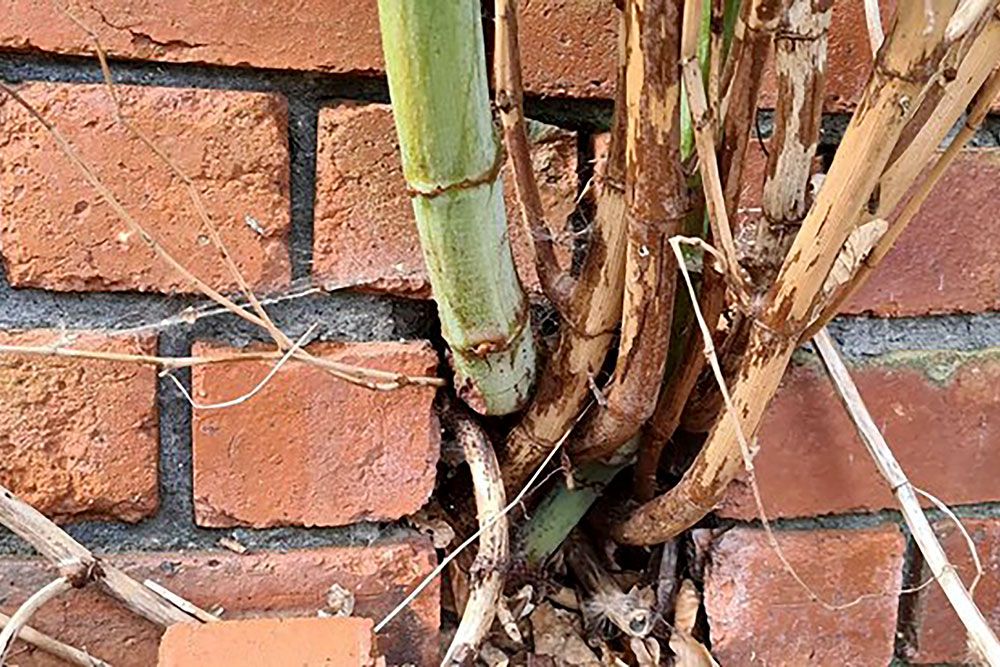
Invasive plant species can damage property, infrastructure
By Renee Sandelowsky and Helen Varekamp
– Renee Sandelowsky and Helen Varekamp are Bayfield residents and local volunteers. They are writing a monthly series of articles about the benefits of planting native species of plants and the need to remove invasive species. This month (August 2026) they are writing about the negative effects, of invasive plant species, on property and infrastructure.
Many of our readers are well aware, by now, of the damage invasive species of plants can cause and the costs associated with eradication.
As a country, Canada has pledged to reduce the spread and introduction of invasive species by half by 2030.
Since gardening is the primary pathway for their introduction, we, as individuals, can take responsibility and provide our support by choosing not to buy invasive plants, to remove them from our gardens and to learn more about their impacts.
Invasive plant species can harm drainage systems and damage property and infrastructure while increasing the risk of fire and erosion and even reducing property values:
- Knotweed roots are so strong they can damage pavement, building foundations, and drainage systems by growing through existing cracks and expansion joints, forcing them wider over time and potentially compromising structural integrity. Their dieback in winter also leaves streambanks and slopes bare, increasing erosion.
- Japanese Honeysuckle can smother groundcover vegetation, reducing root mass that holds soil in place and making slopes more prone to erosion.
- Some invasive plants, sold as ornamentals, pose a fire hazard. For example, Chinese Silvergrass forms dense, dry stands late in the season that can ignite easily. The same is true for Phragmites.
- Callery Pear forms dense thorny thickets, has brittle branches prone to breakage, and produces foul-smelling flowers.
- While in Canada invasive plants are not yet widely recognized by the public as a property deterrent, some buyers may be discouraged by the cost and effort required to remove species such as Knotweed or Buckthorn once they understand the scale of the problem. In the United Kingdom, you are legally required to disclose the presence of Knotweed on your property when selling.
- Invasive plants can also damage green infrastructure — which is the vegetation and soils that naturally manage stormwater, filter pollutants, and maintain air and water quality — by displacing deep-rooted native plants, reducing soil stability, and altering water flow and nutrient cycles.
- Other invasives, such as Yellow Flag Iris spread so rapidly and have such a dense root system that it may obstruct waterflow in drainage systems.
The above is only a fraction of the documented impacts. Whether or not this feels personally relevant, the evidence is clear that invasive plants from the horticultural trade impose significant costs on nature and on our economy.
As a gardener, please choose your plants wisely and consider becoming a supporter of the Canadian Coalition for Invasive Plant Regulation — it’s free!
– Renee Sandelowsky and Helen Varekamp are Bayfield residents and local volunteers. They are writing a monthly series of articles, about the need to remove and switch away from invasive plants in favour of native species of plants, for the Canadian Coalition for Invasive Plant Regulation.